When considering hospital beds, one critical question arises: what is the difference between manual and electric hospital beds? Understanding these differences is vital for healthcare providers and patients alike. Manual beds require physical effort to adjust, often putting strain on caregivers. These beds may lack certain features, but they can be more cost-effective.
In contrast, electric hospital beds offer ease of use. They provide smooth adjustments at the touch of a button. This convenience enhances comfort for patients, particularly those with limited mobility. However, some may argue that reliance on technology can lead to complications if equipment fails. Additionally, electric beds often come at a higher price point.
Choosing between these options involves weighing comfort, practicality, and cost. Each type of bed serves specific needs in a healthcare setting. By examining the nuances of manual versus electric beds, we can better understand which option suits different situations. Ultimately, the choice can significantly impact patient care and caregiver efficiency.
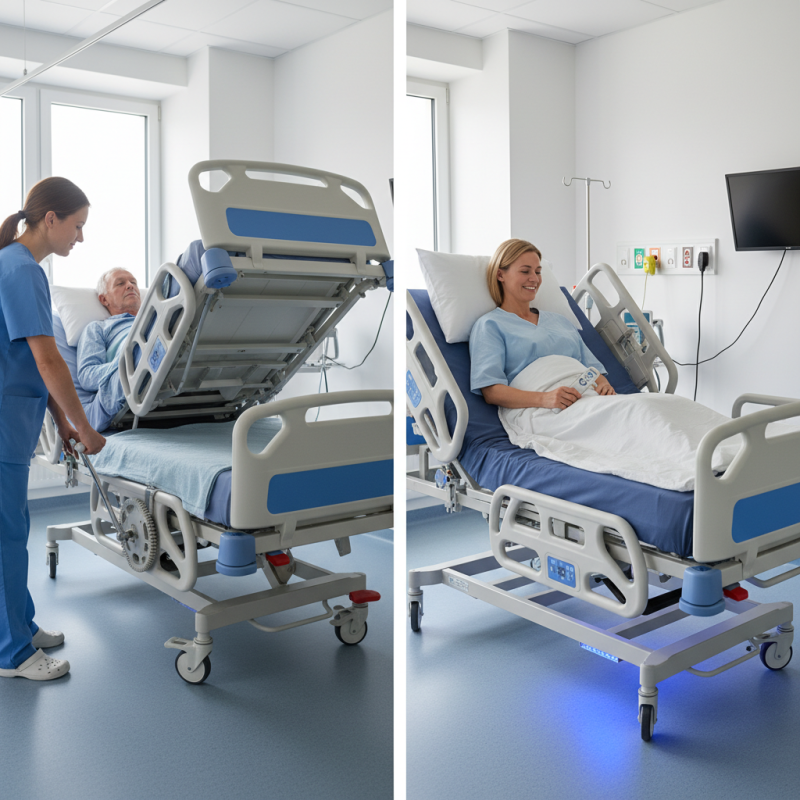
Key Characteristics of Manual Hospital Beds: An Overview
When considering manual hospital beds, several key characteristics stand out. These beds require physical effort from the caregiver for adjustments. This can lead to potential strain or injury. Despite this, they are often more affordable than electric alternatives, making them attractive for some healthcare facilities. According to a 2021 report by the Healthcare Equipment Institute, nearly 40% of hospitals still utilize manual beds due to budget constraints.
Manual beds typically offer basic positioning features. This includes head and foot elevation, which can be adjusted using hand cranks or levers. This functionality supports both patient comfort and necessary medical care. However, limited adjustability may restrict optimal positioning for some patients. In fact, studies show that positioning can significantly impact patient recovery, highlighting the potential drawbacks of manual beds in certain situations.
Another aspect to consider is longevity and maintenance. Manual beds have fewer electrical components, which may lead to reduced maintenance costs. However, the wear and tear from manual adjustments can affect their longevity. According to a survey by the American Hospital Association, around 25% of healthcare facilities reported frequent repairs on older manual beds. This raises questions about efficiency and reliability in patient care environments.
10 Key Differences Between Manual and Electric Hospital Beds
Electric Hospital Beds: Features and Benefits for Patients
Electric hospital beds enhance patient comfort and care. These beds offer adjustable positions for sleeping, sitting, or resting. This versatility can help improve circulation and reduce pressure sores. With the push of a button, patients can easily modify their positioning. This self-sufficiency can boost morale and independence.
Moreover, electric beds come equipped with various features. Some have integrated scales, allowing for easy weight monitoring. Others may include bedside controls for caregivers. These functionalities simplify patient management and enhance safety. However, they require access to power sources. In case of a power outage, manual adjustments may be necessary.
While the benefits are clear, there are considerations to think about. Electric beds can be more expensive than manual ones. Maintenance is also critical; periodic checks are needed to ensure proper function. Additionally, not all patients may be comfortable with technology. Balancing these factors is crucial for providing optimal care in a hospital setting.
Comparative Analysis of Lift Mechanisms in Manual vs. Electric Beds
Lift mechanisms play a crucial role in defining the functionality of hospital beds. Manual beds rely on simple mechanical systems, requiring physical effort for adjustments. Caregivers must pull levers or turn cranks to change the height or position of the bed. This process can be time-consuming, especially during emergencies. A study by the Journal of Healthcare Engineering indicates that manual beds can increase physical strain on caregivers, with over 60% reporting back discomfort due to frequent lifting.
On the other hand, electric beds offer advanced lift mechanisms powered by motors. These beds can adjust with just the push of a button, providing seamless transitions for patients. According to a report by the American Hospital Association, 75% of hospitals have adopted electric beds to enhance patient care and reduce caregiver fatigue. The precision of electric mechanisms allows for adjustments that support better patient positioning, which is vital for recovery. However, this reliance on electricity raises questions about the accessibility in areas with limited power supplies.
10 Key Differences Between Manual and Electric Hospital Beds
| Feature |
Manual Hospital Beds |
Electric Hospital Beds |
| Adjustment Mechanism |
Hand cranks for height and positioning |
Electric motors for automatic adjustment |
| Ease of Use |
Requires physical effort |
Simple button controls |
| Weight Capacity |
Typically lower weight capacity |
Higher, more robust weight capacity |
| Maintenance |
Less maintenance required |
Regular maintenance for electrical components |
| Cost |
Generally more affordable |
Higher initial cost |
| Portability |
Easier to move around |
Heavier and may require additional moving aids |
| Patient Comfort |
Basic adjustment for comfort |
Enhanced comfort with better positioning |
| Safety Features |
Limited safety features |
Advanced safety features, like emergency stop |
| Power Source |
No power source needed |
Requires electric outlet or battery backup |
| Customization |
Limited customization options |
More options for customization and features |
Cost Implications: Manual vs. Electric Hospital Bed Investment
Investing in hospital beds is a significant decision for healthcare providers.
The cost implications of manual and electric hospital beds can vary widely.
On average, manual hospital beds range from $500 to $1,500,
while electric beds typically start at $1,000 and can exceed $5,000.
These differences in price reflect their operational capabilities and features.
Electric beds offer advanced adjustability.
This can enhance patient comfort and accessibility.
Studies suggest that patients recover faster when they can easily reposition themselves.
In fact, a report by the American Hospital Association indicates that adjustable beds can reduce nursing time by up to 25%.
This can lead to substantial labor cost savings over time.
However, budget constraints may lead some facilities to choose manual beds, which are less expensive but require more physical effort from staff.
While electric beds may seem like a higher initial investment, the long-term benefits can outweigh upfront costs.
Facilities must consider factors such as maintenance and power consumption.
Some electric models use less energy than others, adding to their overall efficiency.
Ultimately, choosing between manual and electric beds requires careful evaluation of both immediate expenses and long-term financial impacts on operational workflows.
Patient Mobility and Comfort: Impact of Bed Type on Recovery Experience
The type of hospital bed a patient uses can significantly impact their mobility and comfort during recovery. Manual beds require caregivers to adjust the position physically. This can be exhausting for staff and may limit the patient's independence. On the other hand, electric beds offer easy adjustments with just a push of a button. Patients can find their preferred positions without always needing assistance.
Comfort plays a vital role in recovery. Electric beds often provide better support and allow for different positioning options, which can enhance patient comfort. This flexibility is especially important for individuals with specific medical needs. However, not every patient prefers the same experience. Some might feel more secure with manual adjustments, even if it comes at the cost of ease. This reflects a challenge in balancing patient choice with the benefits of modern technology.
Patient mobility is another critical area where bed type affects recovery. Electric beds can enable patients to shift positions easily, contributing to better circulation. Yet, there may be concerns about over-reliance on technology. Some patients may find methods of manual adjustment more familiar and comforting. Each type of bed has its pros and cons. The choice should be guided by individual needs, offering a path that prioritizes recovery and comfort.
FAQS
: Electric hospital beds enhance comfort, allow adjustable positions, and can improve circulation while reducing pressure sores.
Patients can modify their positioning easily, boosting their morale and self-sufficiency, enhancing their independence during recovery.
Features often include integrated scales for weight monitoring and bedside controls for caregivers to manage the patient safely.
Yes, electric beds typically have a higher cost due to their advanced features and technology compared to manual beds.
Periodic checks are necessary to ensure their proper functionality, which is critical for patient safety and comfort.
Not all patients feel comfortable with technology, which may require additional training or adjustments for some individuals.
Yes, manual beds often increase physical strain on caregivers, leading to discomfort and fatigue, especially during frequent adjustments.
Electric beds allow for easy position changes, improving circulation, while manual beds can limit patient independence and adaptability.
The choice should reflect individual patient needs, balancing comfort, recovery, and personal preferences for technology or manual adjustments.
Some patients may find manual adjustments more comforting and familiar, which can lead to anxiety about using electric systems.
Conclusion
The article "10 Key Differences Between Manual and Electric Hospital Beds" explores what is the difference between manual and electric hospital beds by highlighting their distinct features and benefits. Manual hospital beds require physical effort for adjustments, which can limit patient mobility and comfort. In contrast, electric hospital beds utilize powered mechanisms for simple and precise adjustments, enhancing patient experience and aiding recovery.
Furthermore, the comparative analysis of lift mechanisms illustrates how electric beds offer ease of use for caregivers and patients alike. Cost implications are also discussed, noting that while manual beds may have lower initial costs, electric beds can provide long-term benefits in terms of patient care efficiency and comfort. Overall, the choice between manual and electric hospital beds can significantly impact patient mobility and comfort, ultimately influencing recovery outcomes.

 Tucson Medical